
News Center
新闻中心
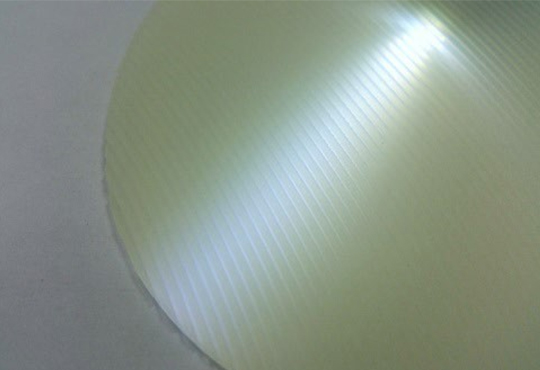
In Chemical Mechanical Planarization (CMP) processes, the choice of polishing pad directly impacts wafer planarization quality, defect control, and production costs. This article provides a technical comparison between PlanarPad non-porous and traditional porous CMP polishing pads.
Traditional porous pads rely on internal pore structures to store and transport slurry, but pad wear causes pore changes that lead to removal rate fluctuations and process instability.
PlanarPad non-porous pad uses PlanarX's proprietary pore-less polyurethane technology. Abrasive media is uniformly distributed through the pad surface microstructure, unaffected by wear, achieving truly consistent removal rate profiles.
2.1 Removal Rate Consistency — PlanarPad maintains stable removal rates throughout its entire operational life with significantly better batch-to-batch consistency than porous pads.
2.2 Pad Lifespan — Non-porous polyurethane achieves ~30% higher density, extending pad life to 1.4x that of traditional porous pads.
2.3 Planarization — Superior wafer surface planarization with better dishing and erosion control.
2.4 Defect Control — Non-porous structure eliminates loose particle generation from pore collapse, significantly reducing defect rates.
2.5 Metal Contamination — Higher purity polyurethane suitable for high-precision processes sensitive to metal contamination.
Client test data confirms PlanarPad outperforms competing porous pads across all metrics: significantly improved removal rate stability, wafer defect rate reduced by over 40%, pad lifespan extended 1.4x, consistent planarization unaffected by pad wear.
PlanarPad non-porous CMP polishing pad addresses the inherent limitations of traditional porous pads through material innovation. PlanarX continues to invest in R&D to deliver higher-performance CMP polishing solutions.


 WeChat